AUTHORS
Sarah Hall Q&A
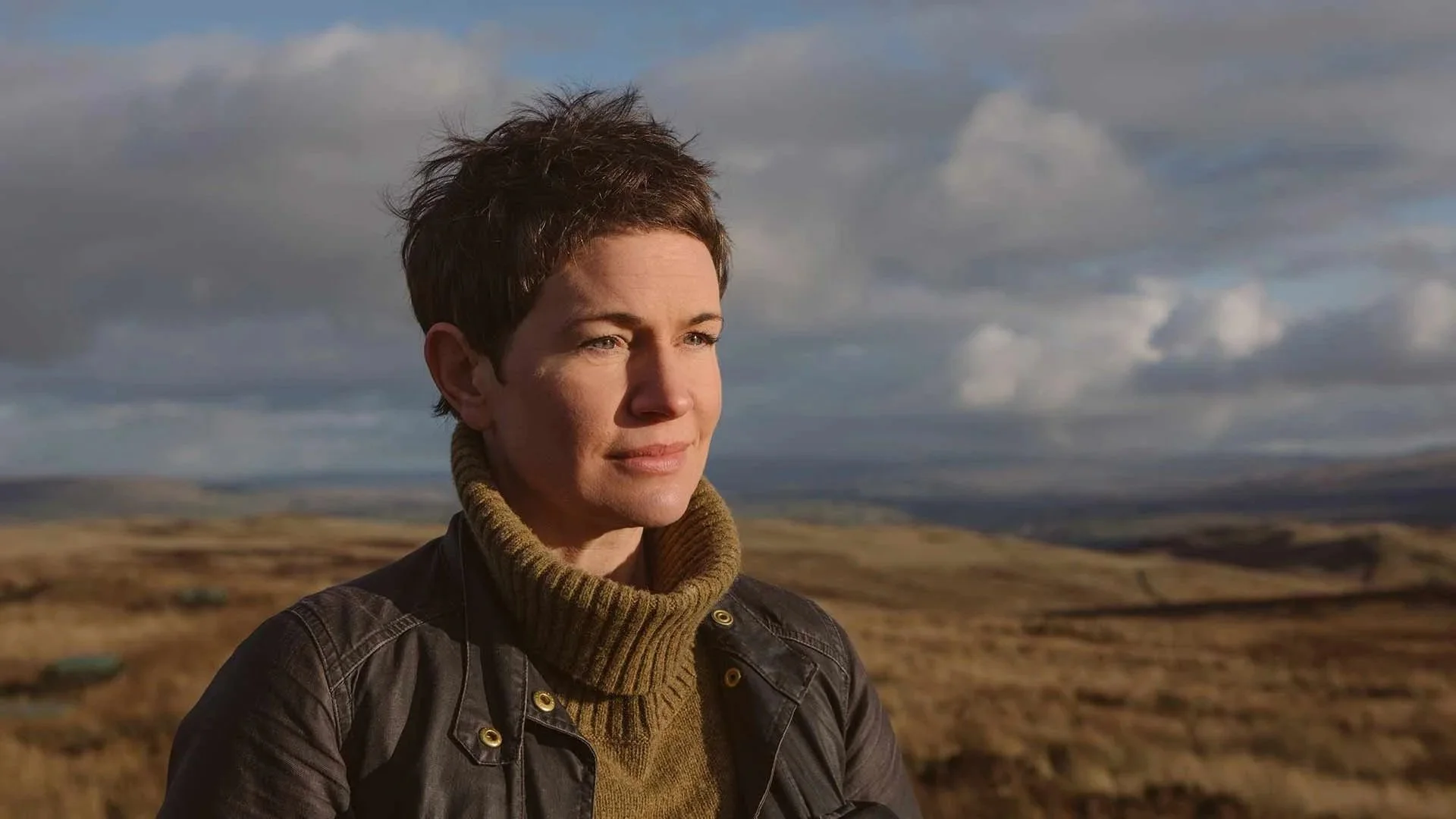
Sarah Hall was born in Cumbria. Twice nominated for the Man Booker Prize, she is the award-winning author of six novels and three short-story collections: The Beautiful Indifference, which won the Edge Hill and Portico prizes, Madame Zero, winner of the East Anglian Book Award, and Sudden Traveller, shortlisted for the James Tait Black Prize for Fiction. She is currently the only author to be four times shortlisted for the BBC National Short Story Award, which she won in 2013 with 'Mrs Fox' and in 2020 with 'The Grotesques'.
1. Why do you tell stories?
It’s not so much a compulsion to tell stories, writing just feels like the best way for me to communicate ideas and expressions, far better than speaking! Picture a quiet, wild-looking kid ranging around the Cumbrian moorland, thinking about realities and creating virtual realities in her head; that was my childhood and it must have laid the groundwork. I feel like my imagination is quite athletic, and it needs to run all the time.
2. Without talking about plot in any way, what would you say Helm is about?
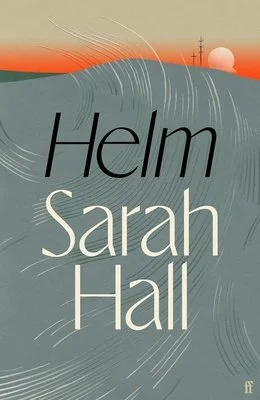
Helm is the fictional biography of the only named wind in Britain. It covers millennia, from the wind’s origins to its possible demise from climate change. It’s made up of all the ways humans have perceived the weather across time, real and invented tales about the Helm, plus Helm’s own versions, and Helm’s incarnations as an aerial demon, sky monster, scientific curiosity, etc. It’s a history of meteorology too, all be it a rather antic and rusticated one.
3. How much did the actual Helm Wind play a part in your life growing up? Were you aware of mythologies and lore surrounding it as you were growing up? Was there anything in your research for this novel that really surprised you?
I was very aware of the Helm. I’m from the Eden valley and, while not directly in in its bore, I lived close enough that I could see the signature cloud formations from the hill next to my home. I knew how spectacular and powerful and disruptive it was. But it’s not a terribly well known wind, beyond Eden. And even though I’m local, while researching for the book so many anecdotes and facts and speculations cropped up I’d never heard — nicknames, bonkers ideas about how to control the wind, exorcisms, the wind’s effect on animals and architecture, the experiments performed over centuries to try to understand its vectors. It was all totally fascinating and I could have written twenty books, which is why this book took several decades to finish maybe).
4. The tone of Helm's voice is very interesting! It is quite puckish, and made us chuckle often even when it was causing great devastation! How did you decide on this "characterisation" of Helm for want of a better word?
The research helped with tone I think, especially research into demonology. Aerial demons were believed to be naughty and perverted, obscene, comic, offensive, clever. Once I’d decided that Helm should have voice(s) it opened the door to a mercurial spirit, in substance and tenor, and led to a great range of moods — angry, playful, teasing, wry, mournful, possessing force and levity, all the things a wind can be. Puck was a leading influence, but also I think I just needed to find the right bespoke narrator for this particular book, originality, because this wind is unique in status in the UK.
5. Helm is beautifully woven with a multiplicity of voices, including a wild neolithic voice. Did any of these voices present you with specific challenges as a writer?
Definitely! And quite a bit of hand-wringing about whether I could pull of authentic stories from periods that put me well out of my comfort zone, e.g. late neolithic, Dark Age, Victorian. I had to pay attention to the details of research, apply enough of them to create a credible, sensual, historical reality for each story, but also concentrate on humanising and de-historicising (if you see what I mean) each character in each era, in order for the reader to connect with them. Sometimes I had to imagine a pre-industrial Britain, with glades and creatures long extinct. Sometimes I had to imagine myself into the persona of a crusading Christian fanatic (I’m a humanist, so you can imagine the contortion there…) It was like training for some creative mental olympics where I was competing in every sport.
6. Environmentalism tends to appear in many of your books, including one of our bookshop’s most favourite books ever, Burntcoat. Do you tend to feel hopeful or more concerned about the future of our physical world?
Both. I’m not sure it’s an either/or situation. There are people actively working to restore nature and actively working to damage it. The health of our physical world depends on our economies, our power structures and hierarchies, philosophies and political movements. To get beyond mere (I say mere, it’s going to be anything but mere) adaptation to climate change, there will need to be some very big revolutions. But back to being a humanist — I do believe it is our responsibility and within our capacity and capability to change things for the better and to act for the good of people. The trick, as ever, will be cooperation.
7. The composition of this book feels mercurial like the wind itself. How did you go about structuring/composing Helm and how long have you been sitting with this work?
Aaaagh. Does that answer the question? Structuring was so hard. Each world created needed to work with the others, balance and turn, like spinning plates. There’s a kind of mad stormy chaos to the form of the book, everything swept up and moving, but underneath it I hope there’s an order or ‘logic’ that helps orient the reader. And there are common themes throughout, about how we interact with nature, trying to control it or coexisting with it. Editing was a very literal process at some stages. Pages and chapters printed and laid out, a book actually built.
8. What were you under the influence of (books, authors, ideas, art, or anything else) while writing this book?
The last few years, when I really got traction writing the novel, I had a couple of pictures up on the wall by my desk — of devils/demons, but very nature-y looking ones. I think they probably had an effect on the spirit of the book. I kept going up to Long Meg stone circle too, featured in the novel, and I kept making drives over the mountain road leading from Kendal, where I live now, to my home valley — which is the perfect vantage point for Cross Fell and the storm clouds. But honestly, Helm has been with me so long, twenty years at least, that there have been multiple changing influences along the way.
9. Which adjectives by readers and reviewers used to describe your writing, most please you?
Another writer-reader described me/my writing as ‘a natural phenomenon’, like the Helm, which was so wonderful. I can’t think of a nicer compliment!
10. Tell us about your natural writing habitat. Does it look out onto the wild?
It does! My windows look out onto hills and trees. My house is full of plants, so I can pretend I’m snoofling about in the undergrowth like something feral. And quite a lot of the art about the place is nature-related, from birds and frogs to pomegranates and seaweed.