AUTHORS
Gemma Parker Q&A
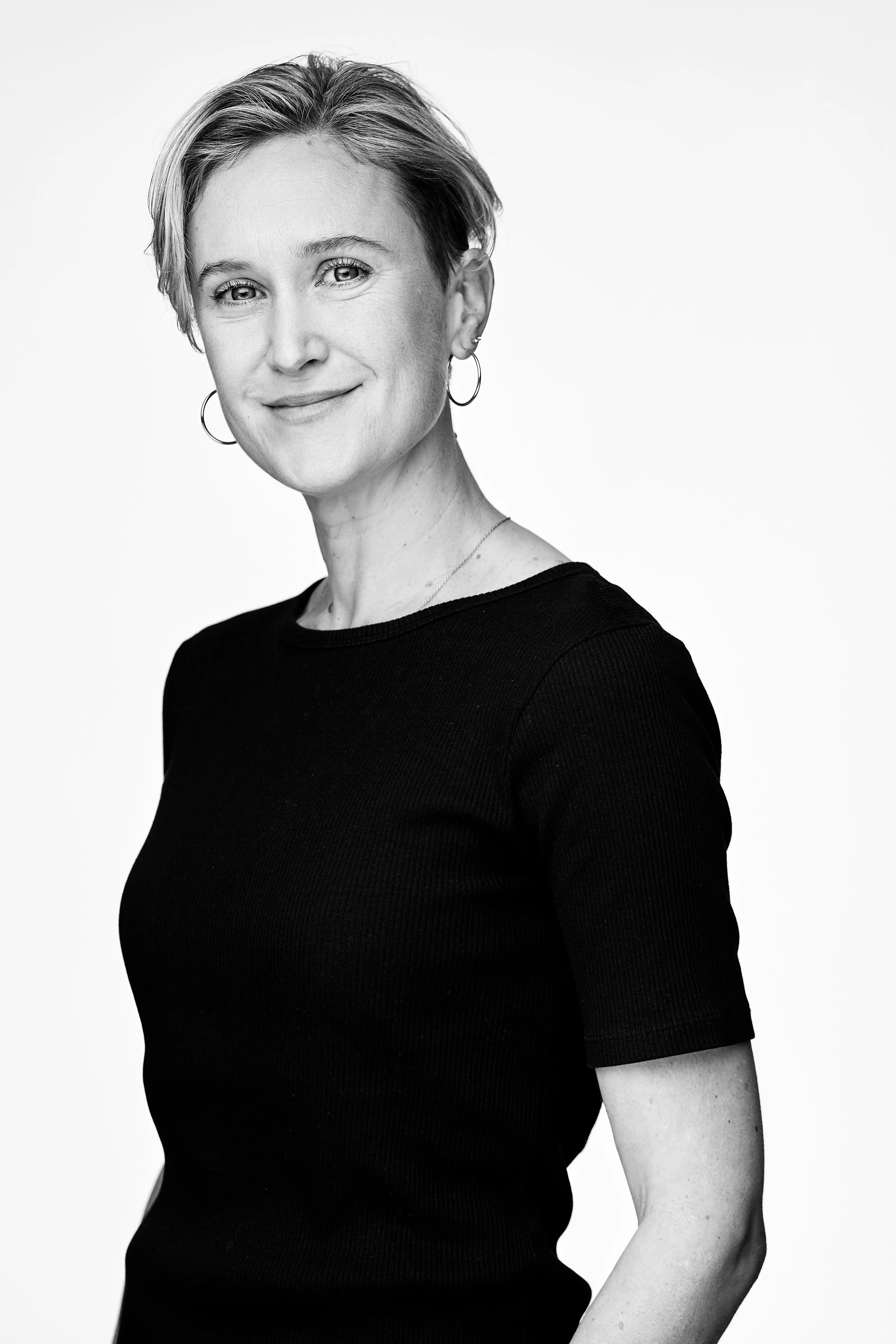
Gemma Parker is a poet and essayist, teaching creative non-fiction at Adelaide University. She has lived, worked and studied in Osaka, Paris, London and Hanoi.
1. Why do you tell stories?
I was raised by natural storytellers. Being told stories, and learning to tell stories, to entertain, and to amuse, was a huge part of my childhood. I think those are still my main two motivations.
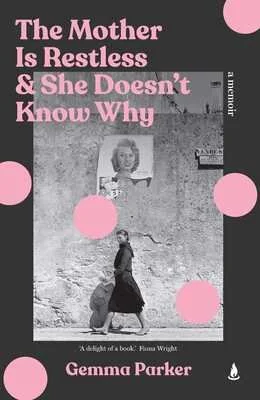
2. Without talking about plot in any way, what would you say The Mother is Restless & She Doesn’t Know Why is about.
The Mother is Restless and She Doesn’t Know Why is about navigating the desire for freedom and adventure alongside a profound sense of the responsibility we have to ourselves and those we love.
3. The way the vignettes gradually accrete in this book is powerful and electric. Can you tell us something about the composition/juxtaposition/collage process?
The composition process was as desperate as it appears in the book. I tried very hard not to think too much about how the fragments would interact – I just wanted them to exist. In the initial stages I also tried not to think about what was relevant. My mantra during composition was It all belongs. It was during the editing process that I focused on the arrangement and juxtaposition of the fragments, how they interacted with each other, and how the narrative threads held and cohered across the work. I culled a lot; I reworked a lot. I was very attentive to the energy and the overall impact of the work.
4. Tell us about nihilism and fernweh (longing for other places), and their relationship to your creative practice?
I remember reading Joan Didion in one of the Paris Review Art of Fiction interviews describing the setting of her first novel, Run River, as the result of being homesick and nostalgic for her hometown of Sacramento.[1] I am also driven to write by a kind of nostalgia and homesickness, but for me it is for places I lived too briefly, or, in the case of fernweh, places I have not yet known. I’m not sure if nihilism is related to my creative practice – questions of nihilism and value and purpose are important to me in terms of living, but they don’t motivate me to write.
5. The writing about your family’s time in Japan, and the summer trip to the island of Shiraishi is particularly potent. I absolutely loved how thrillingly you evoked the heat, the sea creatures, the tremors, the children carousing. What did it feel like to read your journal entries of that time and re-vision the memories?
Shockingly, I have no journals from that time. The descriptions are so vivid because I experienced that period of my life so intensely, almost painfully – I really did return to those memories obsessively in the years that followed. One thing that I remember about the trip to Shiraishi Island is that I very consciously left my phone at home the morning we left. I knew I needed a break from everything, and that was a concrete way to enforce one. I was really alert, and present, for that whole vacation, and I think that is also why the memories, particularly of the island, are so potent for me.
6. I would love to take the class you propose, ‘Reparation, Revaluation, and Procreation: Sticking with the Trouble and Art after The End’. What’s on the reading list and when can I sign up?
Ah, my dream course! I’d love to teach it one day – I’d love to sneak it onto a syllabus somewhere in a college of visual art, or political science. There would be plenty of artists we would consider, but I think the core readings would be Maggie Nelson’s On Freedom, Ursula le Guin’s essay ‘The Carrier Bag Theory of Fiction’, Olivia Laing’s Funny Weather: Art in an Emergency, Eve Sedgwick’s famous essay ‘Paranoid Reading and Reparative Reading’, Elena Ferrante’s In the Margins and Sabrina Orah Mark’s Happily. I like to think of it as a course that would be very collaborative, so I’d also ask students to propose texts. We’d focus on creative works that attempt to move on from apocalypse and disenchantment to engage with what Olivia Laing calls “the repetitive task, day by day and year by year”[2] of using art to put yourself back together.
6a: You write, ‘I can slip into texts and sniff around… digging into the earth of the narrative and unpegging the language from the line of reasoning’. This act or practice strikes me as a more feminist, more earthed and embodied engagement with philosophy. Do you agree?
Yes absolutely. Uninhibitedly, unavoidably, unapologetically, uncompromisingly, infuriatingly embodied!
7. Do you think you will always be compelled by movement, by fernweh, or has the practice of motherhood, and the discipline of lockdown in step with a kind of creative rage/transformation, shown you something else about stillness or staying?
In recent years I’ve been thinking more and more about the feeling, and process, of ‘dwelling’. Dwelling interests me because we can dwell in the present moment, in a very physical sense, but we can also dwell on things, which is more emotional. We can also dwell on places we wish we were still dwelling. So there is both a stillness to it, and also longing. I’m still very motivated by complex, muddy feelings of desire, and yearning.
8. What were you under the influence of (books, authors, ideas, art, or anything else) while writing this book? (This is one of our set questions, but seems particularly pertinent to you and your work, Gemma).
Everything I was seduced and intoxicated by during the writing of this book seems to have made its way into the book – writers and thinkers like Elena Ferrante, Sabrina Orah Mark, Jhumpa Lahiri, and of course Friedrich Nietzsche. But I also found I needed to spend a lot of time out in the forest, hiking, trying to clear my head – so I was under the influence of many artists, but also regularly trying to find a way out from under that influence!
9. Which adjectives by readers and reviewers used to describe your writing, most please you?
A friend of mine wrote me this long beautiful email after she had read my book, in fragments, describing how she was reading the work while she was taking care of her sons (making dinner, taking them to fencing lessons, waiting for them to fall asleep at night), and that was very moving to me. A number of people now have told me that they have read the work ‘in snatches’, just as I composed it. The same friend also told me she couldn’t stop reading it and gave herself a migraine, which I think is just about the best compliment of all time.
10. Tell us about your natural writing habitat.
My preferred writing habitat is quiet, and clean, with a view. I like to be close enough to nature to go for a walk, and I like to listen to music while I write. I can’t listen to music with lyrics so I listen to a lot of instrumental and classical music. I can write anywhere, but that’s my preferred type of environment. Mostly I have to not be able to see the kitchen sink, or the laundry basket.
[1] Paris Review interview with Joan Didion, The Art of Fiction No. 71, 1978.
[2] Laing, The Lonely City, 2011, p. 175.