
AUTHORS
Eva Hornung Q&A
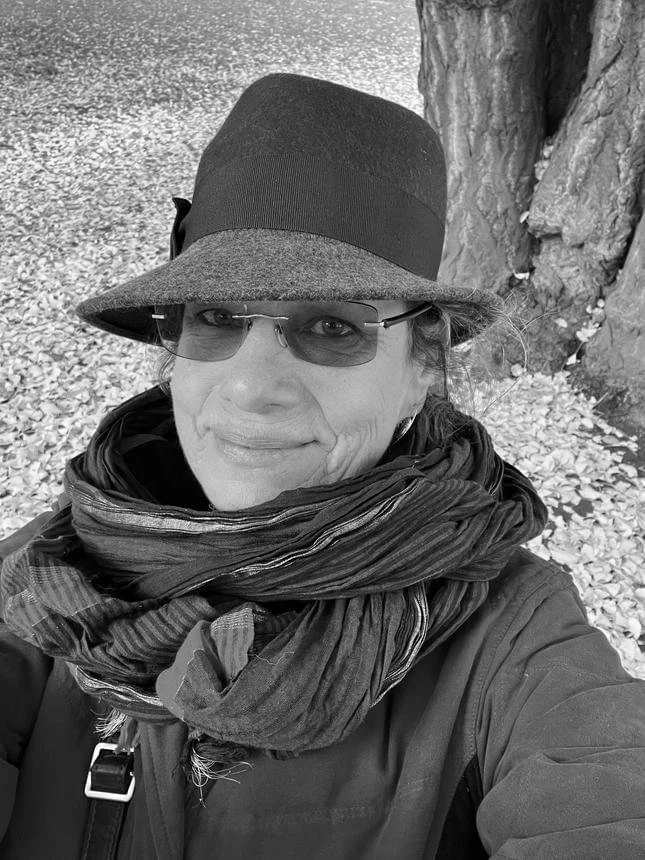
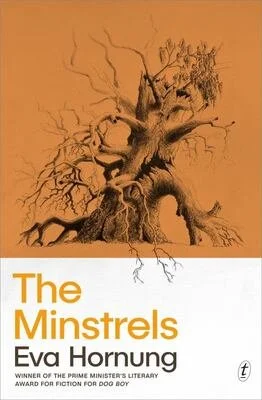
Eva Hornung was born in Bendigo and now lives in rural South Australia. She is an award-winning writer of literary fiction and criticism whose novels have been shortlisted for many awards including the ALS Gold Medal, the Victorian Premier’s Literary Awards, the Steel Rudd Literary Award, the Christina Stead Prize for Fiction and the Miles Franklin Literary Award. Hornung’s highly acclaimed Dog Boy won the Prime Minister’s Literary Award in 2010; The Last Garden won the South Australian Premier’s Prize for Literature in 2018.
1. Why do you tell stories?
It is maybe a compulsion to tell stories to myself. To make patterns out of chaotic feeling and experience and observation. Telling stories through art for others is maybe different, or maybe an extension of that. Certainly part of it is playing with my greatest skill and most subtle raw material: my mother tongue.
2. Without talking about plot in any way, what would you say The Minstrels is about?
It’s sounds rather dry, but in essence the interconnection between human identity, language, art and land and how this most profound relationship nexus is both destroyed and created.
3. Tell us about this place, The Minstrels?
The Minstrels I imagined as a place that has the geological features to be significant to human and animal survival but also dangerous to both. It also has the grandeur and wonder-inducing spectacle to command human interpretations, rituals, and be potent within individual and collective memory.
4. Language as transformation and reclamation is the vivid heart of this book—what did you want to explore about the relationship between language and land and selfhood in this book?
Maybe I simply wanted to make a claim that all three are intertwined, even when we are disconnected from land and unaware. Maybe also explore the idea that the land is bigger and older and more vital than all our namings, uses and abuses. We protect, value, control, destroy, reclaim, encrust, encroach, revere and sign away land all through words. And yet it has a longer slower time outside all speaking. I’m not sure I have finished with that with just one book.
And yet, how precious languages are. Collective cultural artefacts made from our breath, our bodies. Our inheritance. How transforming, how powerful. How painful it is to lose them, to have them erased for us by others. How terrible to have them become incomprehensible to all, to fall silent. Who are we, without them?
All languages I have studied at depth have changed who I am. Each has removed me from what and who I was before. And yet becoming what? Maybe, in the end, just sadder and wiser.
5. More than any of your other books, The Minstrels, seems to be about the power of art and artmaking to transform us personally and collectively—did the writing of this book generate a period of artmaking for you?
It did. Writing, music, drawing. I always knew music was more than important to this book, so maybe I was really open to music without knowing it. Whatever created the chance circumstances of it, I found a muse.
Writers have on occasion had muses. However, I never really knew what one was until about 3 years ago, when by chance I came across the singer composer Dimash Qudaibergen. Something about his voice, his music, his temperament and his story generated a fierce and uncontainable creativity in me. I finished this book on fire with it and have been drawing compulsively since. He didn’t let me go with one book. I feel very lucky, if a little mad.
6. Eva, you write visceral, startling, soaring books about those inhabiting the borderlands—personally, geographically, socially—what interests you about those threshold spaces?
The in-between, the interstices: these places of pain, conflict, misunderstanding, cruelty and possibility. Places of discovery. The chance of transformation. The terrifying unknown is right on everyone’s threshold. Also, perhaps that is where I have always re-found myself.
7. Tell us about the motif of spirals in the book?
I think I won’t say much! Galaxies, sunflowers and nautilus, music and atoms. The return to the past in memory that is never a return in real time… Time.
8. What were you under the influence of (books, authors, ideas, art, or anything else) while writing this book?
Adnyamathanha creative works I helped with: the award winning ‘Wadu Matyidi’ animated film, Uncle Buck McKenzie’s Wadu Matyidi and Utnyuapinha story books, the Adnyamathanha Muda Stories collection, Aunty Lily Neville’s Adnyamathanha. European fertility and drought mythologies. The poetry of TS Eliot.
9. Which adjectives by readers and reviewers used to describe your writing, most please you?
Interesting question! A reviewer once called DogBoy a ‘sombre sobering triumph’. I liked that enough to remember it. What author wouldn’t? It dignifies the work, and it is beautiful. Sombre is a beautiful word. Many words with vowel plus ‘mbr’ sounds are. Ember, timbre, burnt umber. Ombre. Dombra. And followed by sobering. Then ‘triumph’: a perfect power surge from the alliterative build up.
A reader recently sent me a message saying my book had shifted something within her, changed something. She wasn’t sure yet what. I liked that uncertainly and was touched that she shared it.
10. Tell us about your natural writing habitat.
Fairly messy. I do call myself the handmaiden to the Goddess of Entropy. Untended cobwebs and the dogs own the sofas. When I am truly writing, I really don’t care where. Different rooms. Outside. In a café. In the barn. On the tractor in a notebook. A lot of this book was written at my kitchen table beside the wood stove. A warm spot. Winter is good for creative projects, and the kettle is within reach.