AUTHORS
Edwina Preston Q&A
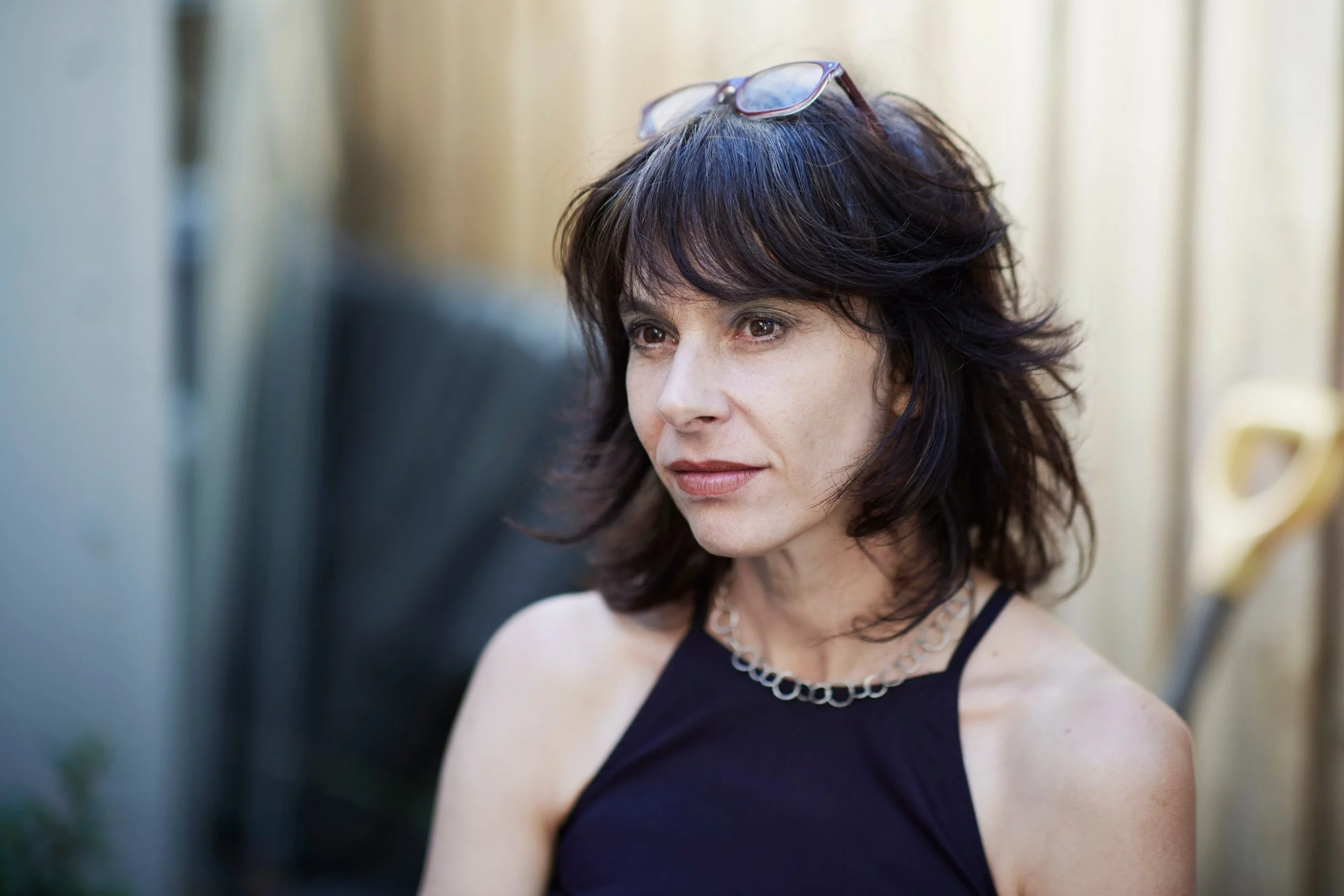
Edwina Preston is a Melbourne-based writer and musician. She is the author of a biography of Australian artist Howard Arkley, Not Just a Suburban Boy and the novels The Inheritance of Ivorie Hammer and Bad Art Mother. Her writing and reviews have appeared in The Age, The Australian, Sydney Morning Herald, Heat, Island and Griffith Review.
1. Why do you tell stories?
I was thinking about this just the other day. I started writing stories as a young child, and it was mainly because I enjoyed reading books so much and I wanted to be more involved in the process – I wasn’t content to just read of writers’ imagined worlds and characters: I wanted to create my own!
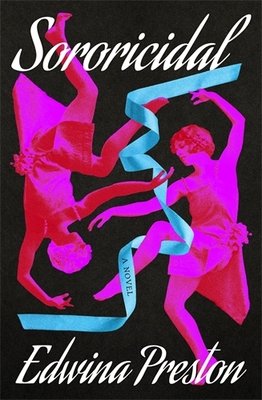
2. Without talking about plot in any way, what would you say Sororicidal is about?
It’s about the ‘outlaw’ emotions that women experience – just as men do – and the ways in which, being socially unacceptable, they can express themselves in surreptitious and deeply manipulative ways. While men traditionally have ritualized outlets for competition, rivalry, hostility – war, politics, sport – women have not had these outlets, and so these emotions can become subterranean, occurring behind the scenes, never to be mentioned or acknowledged. The novel is also, of course, about the different choices women make in life, especially if they decide on an artistic career.
3. We are thrilled you have set this vicious and tender story of sisters in Adelaide.
Your evocation of the state’s weather and light is both stunning and accurate, and we loved guessing at the location of the sisters’ estate. Why Adelaide? I did have the light of Adelaide in mind when I wrote – as well as the lovely pinkish stone of so many houses. Adelaide is (apparently) sedate and civilized, so it felt like the perfect location for murmurings of danger behind an apparently civilised façade. I also wanted to write about a place I was not intimately familiar with – being a Melbournian. Adelaide gave me more imaginative freedom.
4. Did the voices of these two sisters, Margot and Mary, both come to you fully formed (at the same time), or was it more like a call and response between one voice and the other that slowly evolved?
Margot’s voice came quite easily as the first voice. It took some time for me to decide what I was going to do in Part 2. I thought at first I would continue with Margot’s voice, but it didn’t feel that it was working – I was bored with it. When I began finally writing in Mary’s voice, it just jumped off the page and I was off. I think writing is like acting sometimes! You have the right voice and the character evolves behind and within it.
5. Your writing of Margot’s disability is superb, especially the way her pain, shame, and discomfort shape her relationships. What did you want to highlight in Margot’s story?
I was thinking about the ways in which our deficiencies – real or imagined, physical or emotional – can define us, and make us who we are. Margot has a disability, and her disability makes her resentful but also more sensitive than Mary. It defines her, in some ways, less than she thinks it does. Mary even thinks it gives her a gravitas Mary herself does not possess.
6. Mary struggles for a room of her own as a female artist of the early twentieth century, and you have explored the personal costs of artmaking on women’s lives in your previous novel, as well as here with Mary. I love the way you handle the ambiguities between the selfishness and the passion required to choose a life of art. Why do women suffer more in making this choice? OR What does Mary lose in foregrounding her creative work?
I think that the notion that women have to sacrifice motherhood in order to be a ‘real’ artist is a myth created by nineteenth century male artists. This myth – of the tortured, uninterrupted male artist who must give all his passion to his art and has no energy left for his family – is just that: a myth. However, female artists have traditionally subscribed to it. On a practical level, children get in the way of making art, but they also, I feel, enrich it. And they keep an artist grounded in the stuff of real life.
Mary maligns her closest relationships by stealing them for her art. Most (many) artists steal, imitate, plunder, congealing their own style from what they take from others. Mary’s obliviousness to the ethical dimensions of her thefts is her real error – and she doesn’t really understand this until the end of the book.
7. Our book club was fascinated by the section where Mary paints the nudes of Paul and Thierry (male friends in Paris), and we wondered if you could see those images in your mind, or if they were based on real artworks?
I could see these images in my mind in a very post-impressionist impasto way – no graphic details! With Mary’s ‘use’ of men in her life, I was trying to create a female equivalent to the stereotype of the careless emotionally unavailable male artist, who ‘uses’ women for sex and as models for art – and then dispenses with them.
8. Tell us about the symbolism of blue throughout the book. Why does Margot struggle to incorporate blue into her weavings?
I’m not even sure myself what blue symbolizes in the book – except that, somewhere, somehow, it’s the colour of colonizing, of Imperialism, and the Union Jack. It’s also an artificial colour – present more in reflection than in concrete reality. Mary is blue-eyed and so is Pamela – both of these women are inscrutable to Margot so for her, blue represents their foreignness, their inscrutability.
9. What were you under the influence of (books, authors, ideas, art, or anything else) while writing this book? Edwina, books and films that came to our minds: the films, Heavenly Creatures, and Whatever Happened to Baby Jane? And books, The Odyssey, and Art Monsters by Lauren Elkin.
I haven’t read Art Monsters yet but it’s on my list! I was certainly thinking of Baby Jane (I almost included a scene with a dead bird served on a dinner plate in homage.) I also thought of Heavenly Creatures. Part 3 was influenced by the 1975 documentary Grey Gardens about the eccentric reclusive once-high-society American mother and daughter Big Edie and Little Edie Beale – well worth watching!
10. Which adjectives by readers and reviewers used to describe your writing, most please you?
Hmmm… I particularly like ‘deftly’ and ‘dexterously’. I loved Maria Takolander’s comment in the Saturday Paper that she was ‘writing down [my/Mary’s] lines’ as she read.
11. Tell us about your natural writing habitat.
I am very haphazard these days with my writing environment. I used to have a study. But now I work at my dining table in the living room (open plan so there are always things going on in the kitchen, teenagers cooking, dogs barking). The second half of Sororicidal I wrote early in the morning from bed – I have never done this before, and may never again as I am not a morning person, but I found it very effortless!