AUTHORS
Claire Thomas Q&A
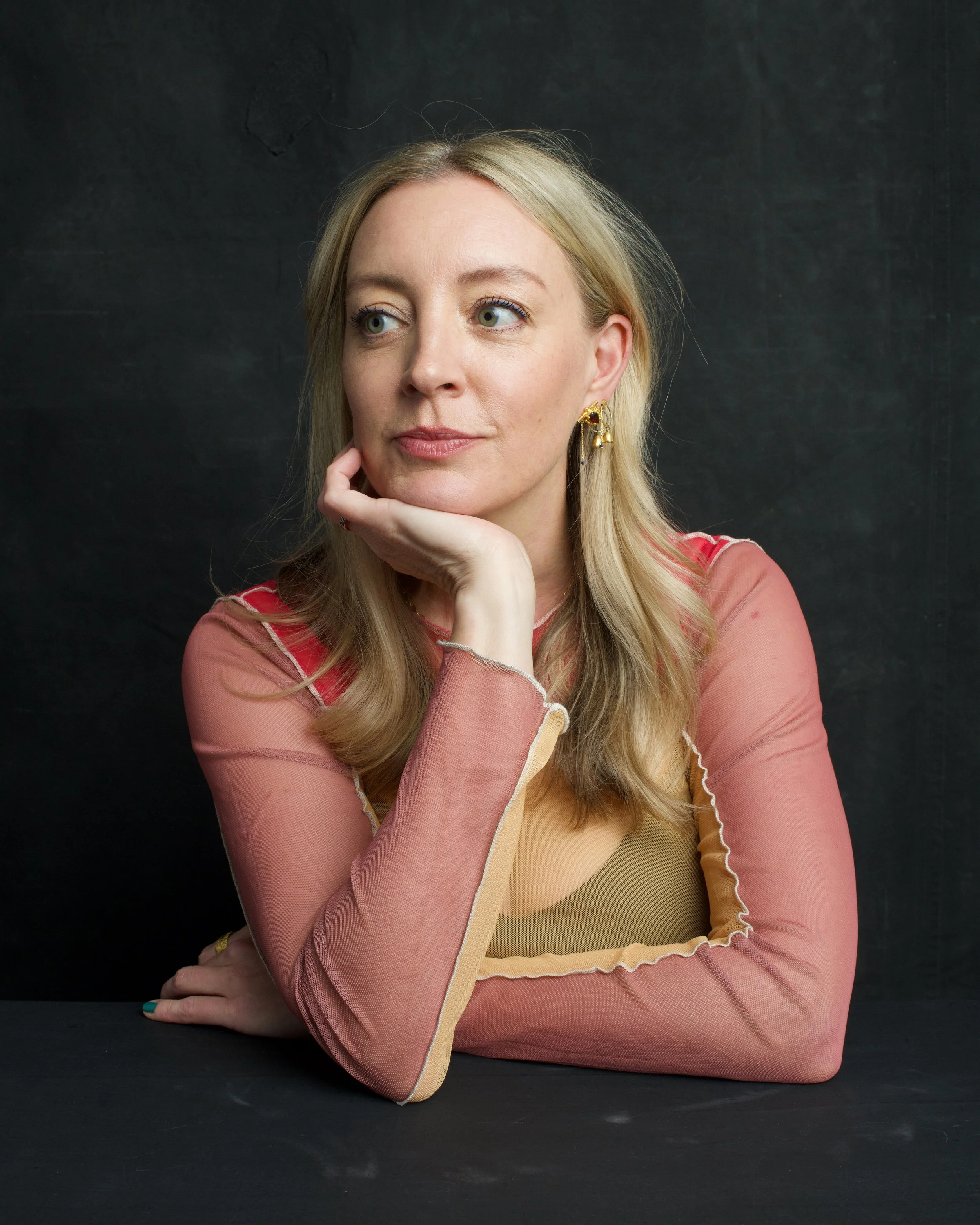
Claire Thomas is a writer from Naarm/Melbourne. Her novel, The Performance, was published internationally in 2021, by Riverhead (USA), W&N (UK), Gallimard (France), Hanser Verlag (Germany), Alba Editorial (Spain), and Hachette (ANZ). It was longlisted for the Miles Franklin Literary Award and shortlisted for the Christina Stead Prize for Fiction in the NSW Premier’s Literary Awards. Her debut novel, Fugitive Blue, won the Dobbie Award for Women Writers and was longlisted for the Miles Franklin.
Why do you tell stories?
To somehow manage my rushing brain. To understand. To entice. To amuse. To console. To challenge. To honour people/art/places. To play with language and form.
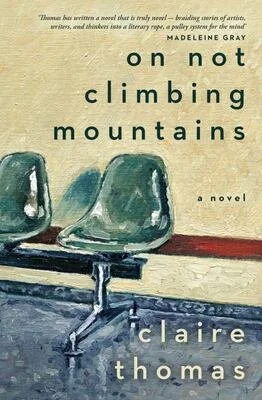
Without talking about plot in any way, what would you say On Not climbing Mountains is about?
Art and books, insects and mountains, trains and beauty, grief and language.
Tell us about the Residency you undertook at Fondation Jan Michalski in Switzerland—and Claire, why the pull for you to Switzerland?
I applied for the Swiss residency – idyllic, generously funded, beautifully situated – because I suspected I was writing a novel set in Switzerland, but then I really started to write a novel set in Switzerland at the Swiss residency. All this is say that the ‘pull’, like much of the creative process, is part mystery and part strategy.
Tell us about your approach to composition, and the cumulative effect?
I’m going to answer this one with a quote from the extraordinary Canadian writer, Anne Carson:
‘The things you think of to link are not in your control. It’s just who you are, bumping into the world. But how you link then is what shows the nature of your mind. Individuality resides in the way links are made.’
What does your protagonist, Bea Angst, mean by, ‘Now is my season for a kind of solitary thinking’?
She means she is really very lonely.
You write: “‘The mountain’, the lady wrote ‘is a symbol’”. This is from Virginia Woolf’s short story set in a Swiss Alpine village—the only story of hers to feature mountaineering and discovered fully typed and formatted after her death in 1941. Claire, what does the mountain symbolise for you?
My novel answers this question much better than I could manage to do again here!
Do you have a favourite set piece in this book OR which artists or writers featured have particularly provoked or inspired you? Who surprised you, in your research for this book?
They all captivated me, in one way or another, and that is mainly why they feature in my novel. The research process was endlessly exciting and affirming, especially as new connections were revealed. The whole process involved sifting through so much material and holding on to the details that felt most alive to me. Annemarie Schwarzenbach is one of the few people I hadn’t heard of until my research, and I was thrilled when I discovered her – this stunning, brilliant, queer, Swiss, anti-fascist writer/photographer who lived a short but extraordinary life. She is due for a revival, a reprint, all of that.
What were you under the influence of (books, authors, ideas, art, or anything else) while writing this book (this is one of our set questions, Claire, but seems particularly pertinent to your book and process)?
This novel is a bit weird and obsessive and while I was writing it, I was weirdly obsessed with a huge array of things, most of which – blessedly – found a place inside its pages. Somewhere during the writing process, I realised that the most important thing is not the influence itself but the extent of your commitment to it. It is crucial to double down on what fascinates you, to accept your own strange ways of seeing.
Which adjectives by readers and reviewers used to describe your writing, most please you?
I’ll take any compliments, to be honest, and it would be unseemly to list the best ones here! An adjective I don’t appreciate, however, is ‘ambitious.’ That often comes with a patronising energy.
Tell us about your natural writing habitat.
I can write anywhere that is mostly silent and solitary, with lots of books around me. I am very lucky to have a studio space that resembles this. I can also write happily while walking outside somewhere human-quiet and beautiful; my phone notes contain the start of much fiction I wrote on the move.