AUTHORS
Pip Williams Q&A
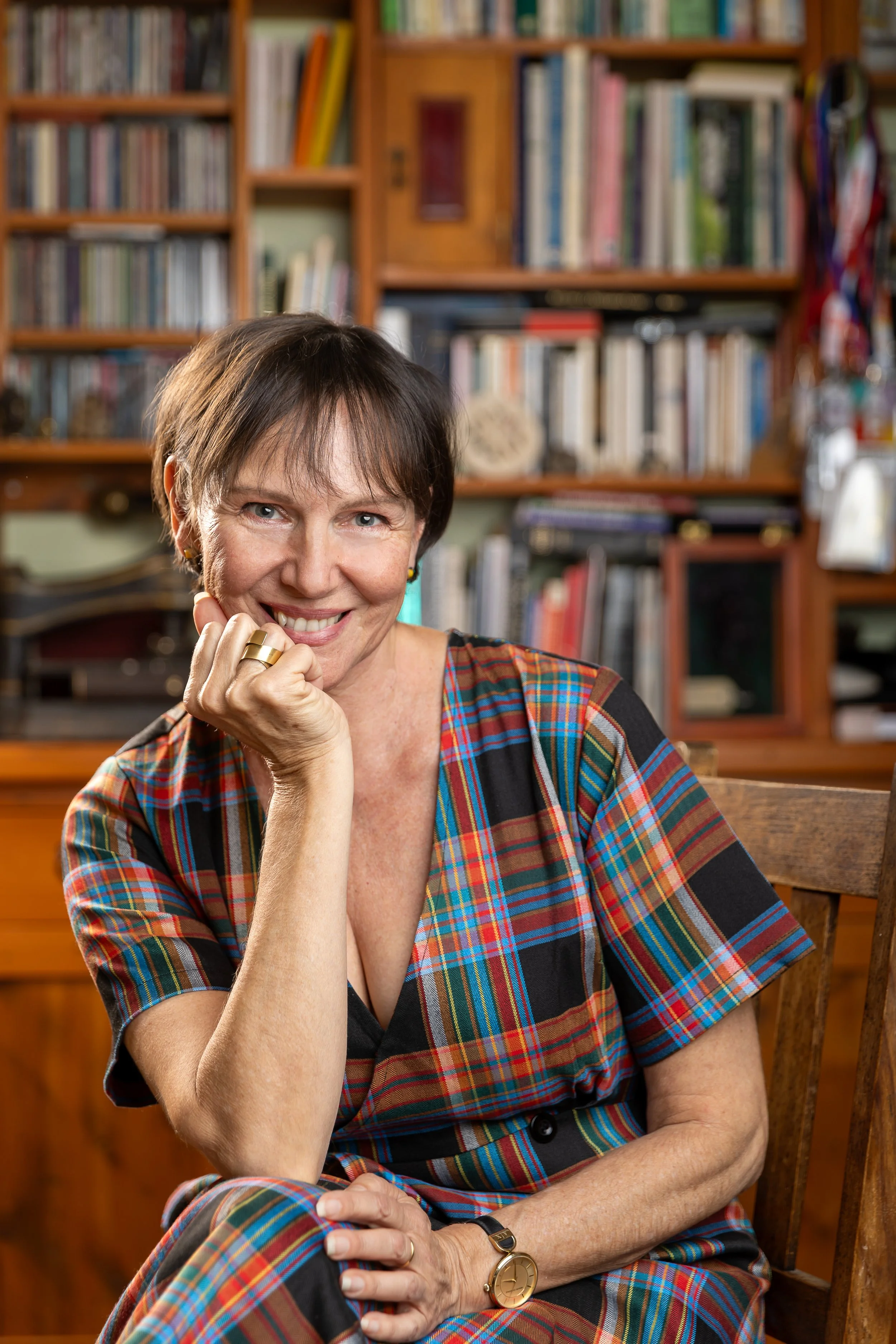
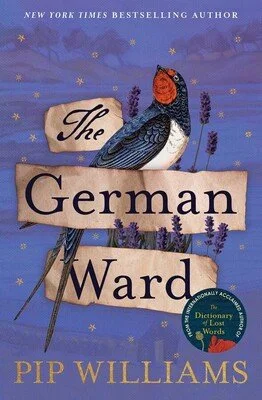
Pip Williams is the author of social research, essays, memoir, and the occasional poem, but she is best known for her companion novels, The Dictionary of Lost Words and The Bookbinder of Jericho. Since its publication in 2020, The Dictionary of Lost Words has won a number of major book awards, was chosen for the Reese Witherspoon Book Club and became a New York Times bestseller. As well as being adapted for stage, The Dictionary of Lost Words is being turned into a book concerto and has been optioned for a limited series. Pip’s second novel, The Bookbinder of Jericho, was published in 2023 and was an instant bestseller. In 2024, it won the Australian Book Industry Awards General Fiction Book of the Year and was Dymocks’ number-one book in its Top 101. Both novels were also recognised in ABC Radio National’s Top 100 Books of the 21st Century. Her upcoming novel, The German Ward, continues her exploration of love, art, and history, bringing to life a vivid World War I story of forbidden love and artistic discovery behind the lines in France. Pip’s books have been published around the world and translated into more than 30 languages.
Why do you tell stories?
I tell stories because I am curious. It’s a selfish act, really. Writing a story is a long indulgent engagement with something I am interested in, something I have questions about. The story is my way of exploring those questions from different angles and perspectives and when it is published it becomes one side of a conversation that I have with a reader.
Without talking about plot in any way, what would you say The German Ward is about?
The German Ward is about desire, love, art and war. But it is also about how we tell stories about the past.
How does Iso Rae (Australian artist) figure as a character in your novel? Can you tell us how you balanced drawing on the biography of a real person, with the fictional elements?
Iso Rae’s artwork from WWI forms the spine of my novel. She lived in Étaples in the North of France, and she volunteered at the British army base there. In the margins of her day, she drew the war. In The German Ward, I have reflected on her art, and the little we know of her life, to imagine my way into that place and time. Of course, I have taken liberties - I have invented sketches and presumed more than I know - but Iso has helped me tell a fiction that I hope resonates with truth. In the end, all we can do with the past is imagine it.
What is your favourite Iso Rae war painting and why?
The drawing is titled: NYD at Lion d'Argent, YMCA, Etaples, August 1919. It is drawing of a performance of Pierrot and Columbine. The players on the stage are costumed and coloured but the men in the audience are barely sketched in – they are nothing more than pencilled heads without detail. NYD stands for ‘Men not yet diagnosed’. It was a euphemism for shellshock or war neuroses, today they’d be diagnosed with severe PTSD. The thing that moves me about this drawing is the date – August 1919 – the war had ended but these men were too damaged to return home. There is more to this drawing, though. On the back is a sketch of a woman. Strong, defiant, beautiful. She reminded me of Tilda, a character in my previous novels. These drawings together – broken men and a woman who looks as if she is bracing for something – became the seed of my story.
Iso depicted people in uniform: The Germans (or ‘Huns’) in their prisoner garb; the British (or ‘Tommies’) in their khakis; Australians in their slouch hats; a VAD nurse in her blue dress and veil. What do you think it meant for a nurse or VAD to put on the uniform (especially when working in the enemy ward) night after night?
Uniforms are like costumes – they help you play a part and they tell people who you are and what to expect. Interestingly, the uniforms worn by British and Australian nurses, were the same as the uniforms worn by German nurses: a blue or grey dress with a red cross on the arm and a white apron. You could not tell them apart and perhaps that is the point. Their job is to care, the nationality of the men they care for should be irrelevant. Putting on the uniform is a reminder of this.
Tell us about your decision to include a present-day thread into the story, and what vantage point does the inclusion of the art historian, Eva, afford and allow?
In 2025, Eva is in the archives of the Australian War Memorial looking at the real and imagined art of Iso Rae. She is trying to interpret the past (a fraught endeavour) from fragments of art left behind by someone who was there - a woman who drew what she observed. I have given Eva some of my experiences and many of my questions. Her motivations are different, but she represents one of three perspectives on one moment in time.
This is your most sensual writing yet. What was it like to step into the fire and write the heat of the scenes between Tilda and Hugo?
It’s harder than you might think! There is fine line between ick and sensuality. I wanted to explore desire, more than anything else. I wanted to understand what role it might play in a time of war, but also between two people who are not allowed to fall in love. It is the anticipation of touch that makes us shiver – that is what I wanted to write about.
What were you under the influence of (books, authors, ideas, art, or anything else) while writing this book?
All of the above. Iso Rae’s artwork was fundamental to the writing of this book. Not just what she drew, but how she drew it. Her war drawings are often quite dark (she drew many at dusk), but she’s applied small dabs of white or yellow or orange to create a sense of warmth and life. I used this technique as a guide. I wrote daubs of light into my story to give it moments of cheer and humour (no one wants to spend too long in the dark). Memoir was also important, especially accounts of nurses on the Western Front, including Vera Brittain, Mary Borden and Ellen La Motte. I was also very much under the influence of Anne Carson, this year’s Nobel prize winner for literature. Her first book, Eros the Bittersweet, was my guide for writing about desire.
Which adjectives by readers and reviewers used to describe your writing, most please you?
Rich. Compelling. Beautiful. The Australian described The German Ward as ‘Spectacular’ and ‘An absolute corker of a tale.’ It’s hard to beat that.
Tell us about your natural writing habitat.
I am in the habit of going to my local café and writing for as long as the words and the coffee flow. I love the white noise of overlapping conversations and the familiarity of a playlist that spends a lot of time in the 70s, 80s and 90s. It doesn’t feel like work and it doesn’t feel isolating. I look forward to it every day of the week.