AUTHORS
Lauren Groff Q&A
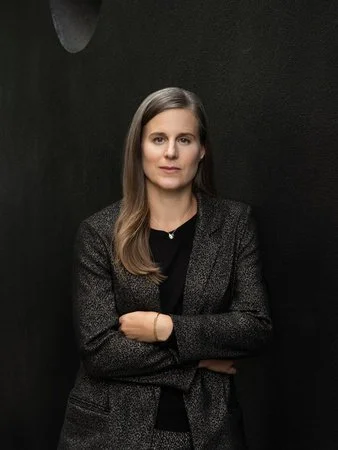
Lauren Groff is a three-time National Book Award finalist and the New York Times bestselling author of the novels The Monsters of Templeton, Arcadia, Fates and Furies, Matrix, and The Vaster Wilds, and the celebrated short story collections Delicate Edible Birds and Florida. She has won the Story Prize and the Joyce Carol Oates Prize, and has been a finalist for the National Book Critics Circle Award. In 2024 she was named one of the “TIME 100 most influential people.” Groff ’s work regularly appears in The New Yorker, The Atlantic, and elsewhere. Her work has been translated into thirty-six languages. She lives in Gainesville, Florida, where she and her husband run an independent bookstore, The Lynx.
Why do you tell stories?
The answer to this fluctuates on a daily basis. Some days, it's because we're all existentially alone and the most beautiful thing on the planet is the moment of human connection that only art can give us. Some days, it's because I'm bad at almost everything else and I only feel somewhat capable when I'm writing. Some days, there's a story in me that feels so urgent I have to get it out or I'm afraid I'll croak. I think humans are innately artistic and most of us have one or two forms that most closely matches who we are. I love music and sculpture and architecture and theater, but am not suited for them. I am suited, I think, for fiction.
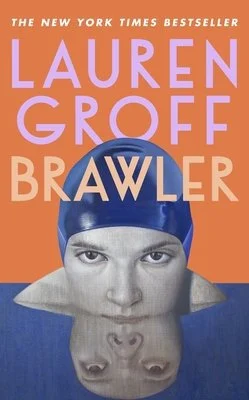
Without talking about plot in any way, what would you say your collection, Brawler, is about at its heart?
I had a hunger to talk about violence in the family and how it echoes the larger violence of the culture. I also love the intimate moment, the small emotional shift that will forever change the future.
The author’s note on the stories, at the end of the book gives a beautiful and tactile sense of your relationship to the stories, and to writing. Can you tell us about the relationship between your body and writing—‘this story lived in my body even before I had language’—and about the significance of houses across the collection?
Writing, for me, is profoundly somatic. I try to disengage everything but the body when I'm working because my brain impedes me more than it helps. I write longhand, every single draft of many, before the final draft, because I do think writing is physical, and curling over a page is so much more intimate and sensual (the smell of the ink, the feel of the paper, the sight of the paper's pores, etc) than typing into a computer could ever be. I also trust the slowness of my thinking and the great freedom of writing by hand, since I really can't read my own handwriting and am set free from the tyranny of what's on the page for the next draft.
What muscles do you feel are activated when writing in the short story form? What does the constraint give you that cannot be found in the larger container of the novel?
Every moment and word needs to pull its own weight in a short story, and novels, as Henry James once said, can be "loose, baggy monsters." I write the first draft of stories quickly, in one sitting, because I love to work with one solid block of energy, and you can't do that (I can't, at least) with a novel. I love story collections because each story contains its own world, and if a collection is ordered carefully, it can be larger than the sum of its parts.
Did the ordering of the collection take some planning, or did the stories begin to converse with one another and reveal the composition/juxtaposition intuitively? What was your guiding principle?
I think far too hard and for far too long about ordering! I think that story collections have to build an argument, introducing the main thematic elements in the first story, changing things a bit with each subsequent story, and fracturing everything outward with the last story. There were some good stories that probably deserve to be in a collection that I left out because they didn't advance the story. I also had to take care to make sure each story is textually different, in terms of length and tone and emotional landscape, so that things weren't too alike in juxtaposition.
In your stories there is often a moment when a character suddenly becomes aware of the difference between how they perceive themselves and how others view them: is that something you think about when you're writing?
I try not to think at all when I'm writing. I think the early, ecstatic drafts come most authentically when you set aside your own thoughts and feelings and opinions, all the voices, and just pay attention to the story. Everything floods in again on later, slower drafts, when I'm working on the language. Early drafts are the exclusive domain of the id.
What were you under the influence of (books, authors, ideas, art, or anything else) while writing this book?
I'm always under the influence of other writers! I think art is always in conversation with art, books beget books, and that nothing is ever sui generis. Among the influences were Flannery O'Connor, Alice Munro, Toni Cade Bambara, Edward P. Jones, James Baldwin; the list goes on and on and on.
What are three books that changed you?
I'm a reader first and a writer second, so hundreds of books have changed me. Emily Dickinson's poems made me into a poet, and then Lorrie Moore's Birds of America made me into a fiction writer. Moby-Dick by Herman Melville reordered my brain and made me understand what it means to take big risks in fiction.
Which adjectives by readers and reviewers used to describe your writing, most please you?
To be perfectly honest, I try not to read any criticism, good or bad, about my work. I don't know! That said, I always laugh a little when people use the word "lyrical." Sometimes they say it with some face kids make when they eat broccoli or arugula: they know other people like it, but they find it bitter. I think some people use "lyrical" to mean too descriptive for their taste, or owning a sort of melancholic, overly serious air. In my mind, lyrical work can be funny and weird, but it's always precise and musical.
Tell us about your natural writing habitat.
I work in a small blue room upstairs, a room in which my boys slept as babies. There are still baby dreams undulating across the walls like jellyfish. I like to work in the dark with a happy lamp until the dawn, and then I'll work by daylight until I run out of steam. Each project has a different place at my extremely long desk, which I'd had made about ten years ago by an incredible local woodworker. Sometimes I'll pull a tarot card or meditate or light incense, but I really only work in that room. It's a place devoted to my work, and nobody else is allowed to enter.