AUTHORS
Karen Comer Q&A
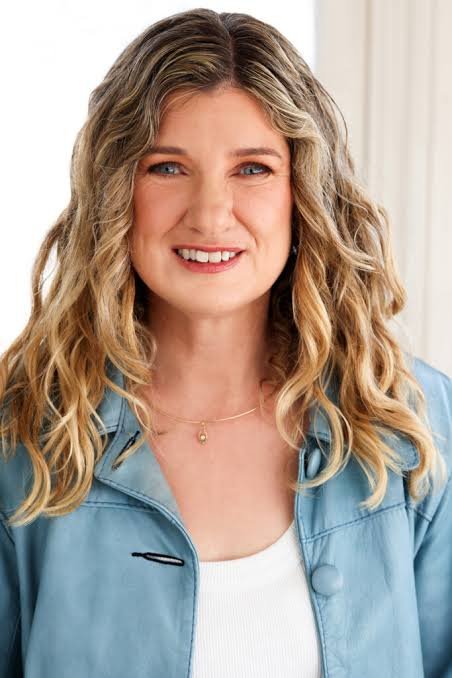
Karen Comer is a freelance editor and presents writing workshops to children and adults. Earlier in her career, she worked in educational publishing and was the editor for children's art magazine BIG. She lives in Melbourne. Karen's debut novel, Grace Notes, published in 2023, was awarded the 2024 CBCA Book of the Year for Older Readers, was shortlisted for the Ethel Turner Prize for Young People's Literature, shortlisted for the 2024 UTS Glenda Adams Award for New Writing and is shortlisted for the 2024 Prime Minister's Literary Award for Young Adult Literature.
Why do you tell stories?
Stories connect us, shine a light into a different world and make us feel less alone.
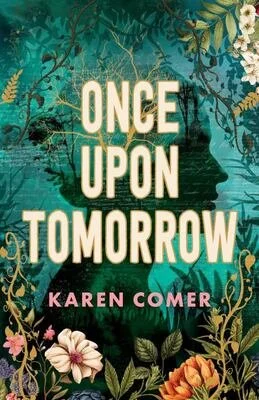
Without talking about plot in any way, what would you say Once Upon Tomorrow is about?
Once Upon Tomorrow is about three girls with interwoven stories about forests, libraries, fairytales, Carl Jung, AI and the future.
We love the way your stories flow in verse. Is this the way words come to you initially? In a poetic rhythm? Or do you add this stylistically later to a prose draft?
Thank you! Writing in verse is my natural writing voice – I collect my ideas as fragments and then write them that way. In later drafts, I polish up the language to make it a little more lyrical.
Once Upon Tomorrow features three voices: Miri, Aleita and Sylvie. Did all three characters come to you as a trio? Or did you meet each of them one at a time? Did you know their stories belonged together straight away?
The idea of a library collecting one hundred books over one hundred years from one hundred authors was my initial concept, based on The Future Library of Norway. I knew I needed a girl’s voice (Miri) for the beginning of the library in 2025 and a girl’s voice (Aleita) for the opening of the collection of one hundred books in 2125. When I wondered what type of books would last for one hundred years, my answer was fairytales. Sylvie’s voice was the third voice for the fairytale story.
Once Upon Tomorrow and Grace Notes both feature young adult protagonists. Is this cusp-of-adulthood time particularly intriguing to you in a character's life?
There are so many ‘firsts’ for young adults and it is such a pivotal time – I really enjoy exploring this through my characters. I meet many teenagers in my school talks and workshops, and am often inspired by their enthusiasm, discernment and curiosity.
Your novels often seem concerned with physical creativity, featuring vivid descriptions of the practices: street art, classical music and craft such as knitting. Do you dabble in other creative areas outside of your writing?
I love writing about creative, passionate characters! I did a street art workshop and I learnt the violin for three years while writing Grace Notes. I dabble in a little craft – making quilts, weaving, embroidery. I’ve also made a few collages with paint and paper, and I make art journals for all my books to collect my ideas.
Do you have a favourite fairytale or folk tale?
I was drawn to Rumpelstiltskin, which I retold in Once Upon Tomorrow. Spinning straw into gold is such an apt metaphor for so many of those mundane tasks which we all have to do. It felt true to Miri – she wonders how she’s going to create her big, beautiful life (her gold) with so little resources (her straw).
What were you under the influence of (books, authors, ideas, art, or anything else) while writing this book?
I read so many fiction and non-fiction books while writing Once Upon Tomorrow – about the climate crisis, AI, fairytales, forests, feminism and Carl Jung. I also watched movies and TV series and spoke to professionals about gum trees, fairytales, Jung and mycelium.
Which adjectives by readers and reviewers used to describe your writing, most please you?
This book felt so audacious to me – it had a hundred-year span and covered so many different themes and topics – so Robbie Coburn’s endorsement ‘a fiercely intelligent, profound and groundbreaking work’ pleases me! And Pip Harry called it ‘an ambitious, luminous feminist fable’ – it’s humbling to think my book was described like this by writers I admire.
Tell us about your natural writing habitat.
I can write anywhere, if I know I can settle in and focus and have enough time. My two favourite places to write are at home in my study with all my books around me and at a local café where they make a delicious chai latte!